

Clinical Evidence
Clinical Evidence
Peer-Reviewed Research on the Elevate 360 Drop Foot Brace
FootScientific products are backed by clinical research. The Elevate 360 Drop Foot Brace has been studied in peer-reviewed research demonstrating measurable improvements in gait for stroke patients.
Published Study
Study Overview
This peer-reviewed case study examined whether the Elevate Drop Foot Brace (identified as a "removable AFO") could improve gait in stroke patients compared to traditional plastic AFOs.
The Problem with Traditional AFOs
The study notes significant compliance problems with traditional plastic AFOs:
- Only 40.5% of stroke patients prescribed plastic AFOs use them at least some of the time
- 29% of patients report that AFOs are too heavy and inconvenient to use with shoes
- Compliance rates in the United States are reported as even lower
- Additional problems cited: plastic AFOs limit ankle movement, require oversized or special shoes, have complicated manufacturing processes, are expensive, and are aesthetically unappealing
Study Subject
The subject was a 64-year-old male undergoing physiotherapy at a rehabilitation hospital in Seoul. He was diagnosed with left-side hemiparalysis due to stroke in August 2012.
Before his stroke, he was a building engineer who visited construction sites across the country. The goal was to restore his gait function so he could return to work.
His condition: He could walk independently on flat surfaces but experienced worse drop foot on inclines, causing increased walking time and vulnerability to ankle injuries and falls.
Methodology
The study measured gait variables before and after wearing the Elevate Drop Foot Brace (FootScientific, Inc., USA).
Assessments Used:
- TUG (Timed Up and Go) Test: Measures basic motility, balance and gait functionality. The subject rises from an arm chair, walks 3 meters, turns, walks back, and sits down. Intra-rater reliability: r=.99; inter-rater reliability: r=.98 for stroke patients.
- FGA (Functional Gait Assessment): Detects small changes in gait stability. Based on a 4-point scale (0-3) across 10 items for a maximum score of 30. Intra-rater reliability: r=.92-.95; inter-rater reliability: r=.91 for stroke patients.
- Wireless 3-Axis Accelerometer (G-WALK, BTS S.P.A., Italy): Measured spatial and temporal gait variables including velocity, cadence, stride length, double limb support, and sway angles across three planes.
Results
All gait variables improved after wearing the Elevate Drop Foot Brace.
| Variable | Before | After | Change |
|---|---|---|---|
| TUG (seconds) | 36.66 | 25.38 | -11.28 |
| FGA (score) | 10 | 12 | +2 |
| Velocity (m/s) | 0.30 | 0.45 | +50% |
| Cadence (steps/min) | 68.0 | 77.2 | +9.2 |
| Stride Length (m) | 1.67 | 2.13 | +0.46 |
| Double Limb Support (%) | 21.7% | 13.8% | -7.9% |
Key Findings
The study confirmed that "drop foot was significantly reduced, heel strike was observed and ankle inversion, which is a risk factor for external injuries, was reduced."
Study Conclusions
The researchers recommend that removable AFOs "need to be appropriately used in gait training, helping patients return to society from rehabilitation with greater efficiency."
Why This Matters
This peer-reviewed research demonstrates that the Elevate Drop Foot Brace produces measurable, quantifiable improvements in gait function. Unlike testimonials alone, these results come from standardized clinical assessments with established reliability metrics.
For patients, this means confidence that the device has been tested in a clinical setting. For healthcare providers, this provides evidence-based support for recommending the Elevate as an alternative to traditional plastic AFOs.
About the Elevate 360 Drop Foot Brace
The study specifically tested the Elevate Drop Foot Brace from FootScientific, Inc. The researchers describe its design features:
Design Features Highlighted by Researchers
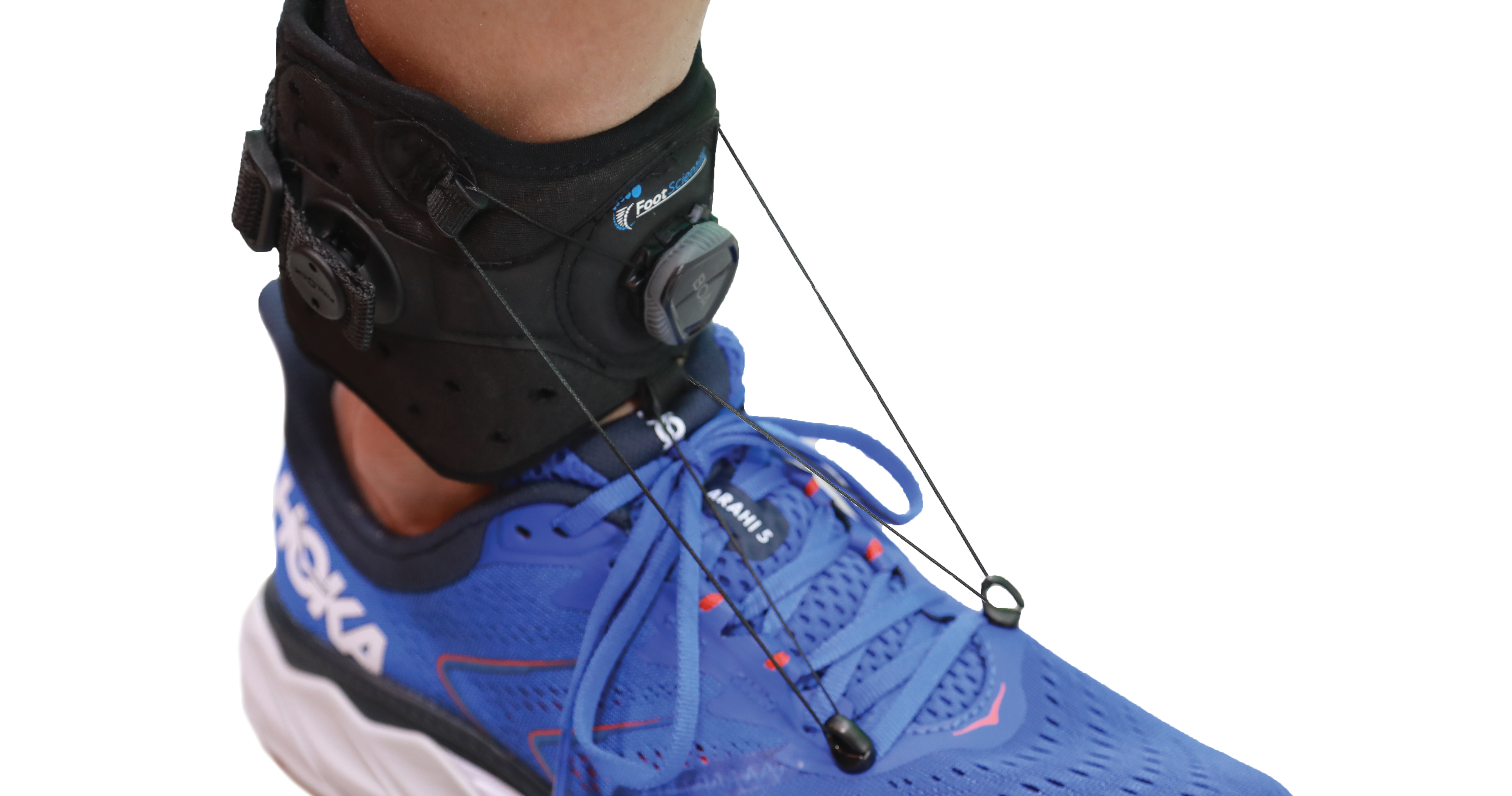
- External Design: "Intended to be placed outside the shoes" - nothing inside the shoe to cause discomfort
- Easy Application: "Covered by straps of waterproofing synthetic rubber materials (Hypalon) and Velcro to fix the both ends which enables easy wearing and removal"
- Adjustable Tension: Uses BOA technology dial to "adjust the dorsiflexion angles of the ankles by adjusting the length of the laces"
- Durable Cord: Spectra cord technology for strength and longevity
Try the Elevate 360
Experience the same technology tested in peer-reviewed clinical research.
Shop NowCommon Questions
Yes. A peer-reviewed case study from Raon Hue Hospital in Seoul, South Korea examined the Elevate Drop Foot Brace using standardized clinical assessments including the Timed Up and Go test, Functional Gait Assessment, and wireless accelerometer measurements.
The study found significant improvements across all gait variables: 31% faster walking speed (TUG test improved by 11.28 seconds), 50% increase in gait velocity, improved cadence, longer stride length, and reduced double limb support indicating better gait symmetry.
The study notes that only 40.5% of stroke patients prescribed plastic AFOs use them regularly. Reasons cited include: too heavy and inconvenient (29%), limit ankle movement, require oversized or special shoes, expensive, and aesthetically unappealing. US compliance rates are reported as even lower.
The researchers highlighted the Elevate external design (worn outside the shoe), easy application with Velcro straps, adjustable tension via BOA dial technology, and durable Spectra cord construction. These features address the comfort and convenience issues that cause patients to abandon traditional plastic AFOs.
The study concluded that appropriate use of removable AFOs positively influences improvement of ambulatory abilities for stroke patients and brings them to pre-disease levels of functioning and quality of life. They recommend removable AFOs be used from the early stage of gait training.