

FAQ
Frequently Asked Questions
Answers about orders and shipping, our Arches orthotics and the Elevate Drop Foot Brace. For clinical questions, see Expert Medical Q&A with Dr. Rob Faux.
General
Orders, shipping, returns and insurance.
All of our products have a 60-day satisfaction guarantee. If you are unhappy with your purchase, you can return it anytime within 60 days of purchase for a full refund (excludes shipping and must be in resell-able condition).
Domestic returns are free. For international returns, customers are responsible for the return shipping costs.
Unfortunately, we are currently unable to process exchanges. You can return your item to us and place an order to receive the item of your choice. Please follow the return policy steps to receive a shipping label.
Shipping charges depend on the location and weight of the package ordered. When checking out, the cost of shipping will be quoted before payment. Packages go out within 1-2 business days.
Yes. We ship our Arches Orthotics line and accessories to all countries. We also ship the Elevate Drop Foot Brace internationally, excluding the following countries for our reseller partners:
Australia, Austria, Belgium, Canada, Czech Republic, Germany, Hong Kong, Hungary, India, Luxembourg, Netherlands, Norway, Poland, Spain, Switzerland and United Kingdom.
Shipping prices for international shipments are quoted at checkout. Customs or duties fees required by your country are the responsibility of the customer.
When your order has been successfully placed, you will be taken to a confirmation page and receive an order confirmation email.
While we do not handle insurance matters directly, our products are registered medical devices and several customers have successfully been reimbursed by submitting receipts to their insurance. We cannot guarantee this and recommend checking with your insurance before purchasing.
We accept HSA/FSA payment at checkout.
The Elevate Drop Foot Brace meets the Medicare Benefit Policy Manual (Chapter 15, Section 130) description of a brace covered for supporting a weak or deformed body member or restricting motion in a diseased or injured part of the body.
Orthotics
Choosing, sizing and fitting your Arches orthotics.
We recommend choosing the larger size if you are between sizes. The orthotics can be trimmed at the top to ensure a perfect fit.
Please note that shoe sizes can vary between brands, so we cannot guarantee that our sizing will fit perfectly with every shoe.
Yes. For maximum comfort and proper correction, remove the insole that came with your shoe and replace it with the Arches orthotic.
Orthotics that have been trimmed will not be accepted for return.
Bracing
Wearing, fitting and caring for the Elevate Drop Foot Brace.
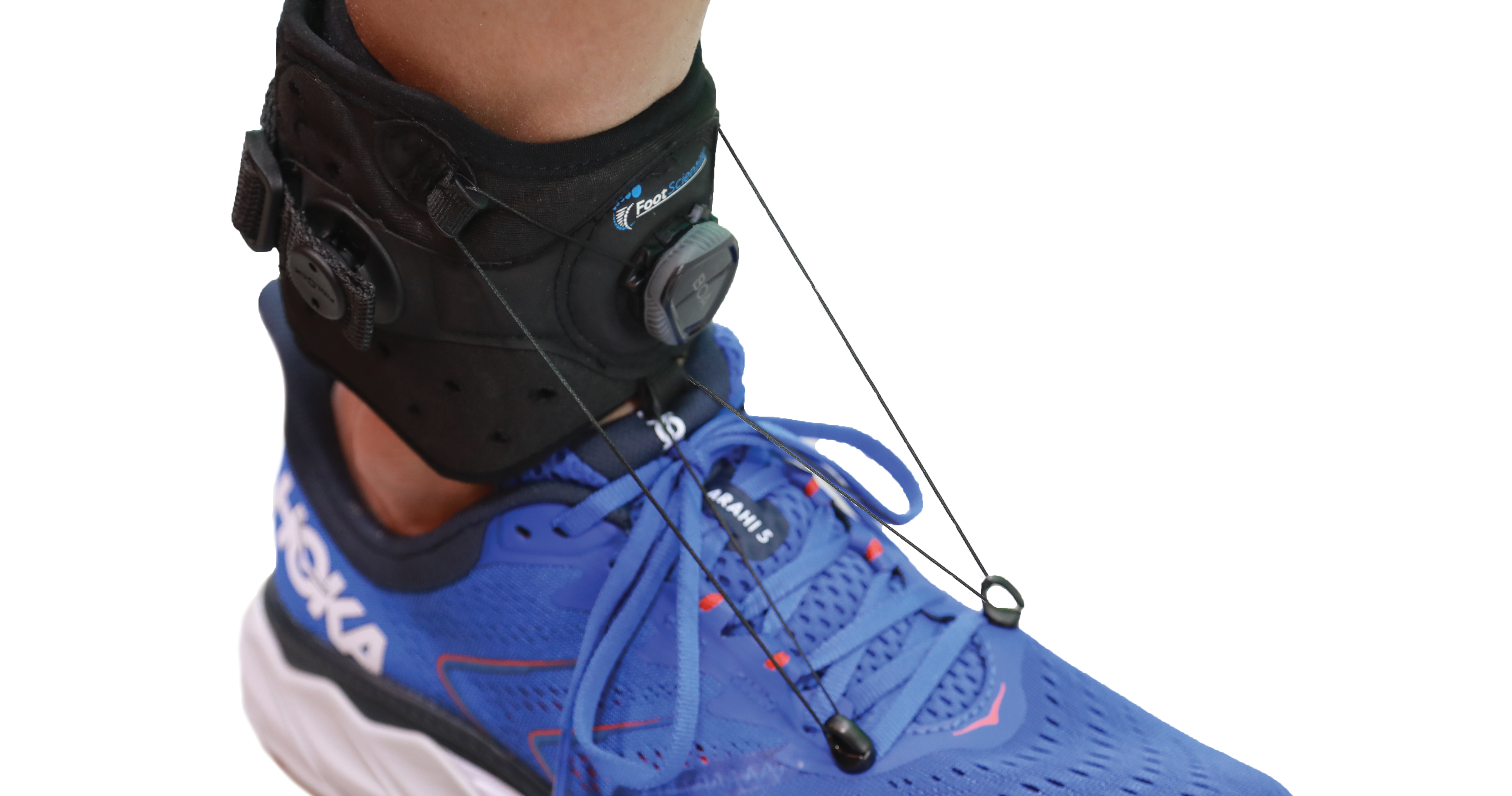
A traditional AFO is a rigid shell worn inside the shoe, which means the shoe has to be sized around it. The Elevate is a lightweight brace, about eight ounces, worn outside the shoe with a BOA dial that sets an adjustable lift angle you can change through the day.
Because your ankle stays free to move, it also helps your stabilizing muscles stay active.
Yes. The Elevate sits outside the shoe rather than inside it, so it works with the footwear you already own. Small stainless steel anchors set into your shoe's eyelets once and stay there. You clip the brace in day to day.
There is no need to buy special extra-depth or wider shoes the way an inside-the-shoe AFO requires.
Yes. The Elevate uses a BOA dial. You turn it to add lift and pull it to release the tension. You can do it with one hand while seated without taking the brace or your shoe off.
That matters because swelling, fatigue and different shoes can change the lift you need over the course of a day.
The brace is one size and can be adjusted accordingly.
Yes. The brace is designed for either the left or the right foot or both.
Please be careful and conscientious for the first couple of hours as you become accustomed to having one or both feet elevated to your preferred level.
Because the Elevate attaches to the outside of your footwear, it works with boots, formal shoes and sandals. Almost all good sandal material will work with the brace. Keens or Drew sandals, for example, have been popular.
We suggest using an awl to place a hole just big enough to wiggle the screw through (with the washer on it), or purchase a Crop-A-Dile if you prefer.
After a few days, you could take the hook out and check for any distortion in the material to ensure all is well.
No. With good leather or other durable materials, the best solution is to use an awl. Press the sharp awl through the material to give it just enough room to wiggle our screw (with the washer on it) through.
When tightened, it is solid and does not tear or stretch the material with wear. Some people like the look of creating their own eyelets using the Crop-A-Dile, but it is not necessary if you have an awl.
No. The hooks take a bit of effort to put into your shoes the first time. After that, just leave them in the shoe and simply put the cord in them when you are ready to wear the brace.
The brace comes with black and silver hook kits. Additional hook kits can be purchased if you want to have several shoes ready to wear.
Watch for excessive fraying. Expect about eight months of daily use.
The lace is fully replaceable and a replacement comes with the brace along with instructions. Additional laces can also be purchased on the site.
FootScientific reports the Elevate is used across a range of drop foot severities.
That said, severe or complex cases, including significant spasticity or ankle instability, should be guided by your orthotist or physical therapist, who can tell you whether an outside-the-shoe brace is appropriate for your situation.
Expert Medical Q&A
Ask Dr. Rob Faux, Board-Certified Orthopedic Surgeon
Get answers to your clinical questions about corrective orthotics, foot biomechanics and treatment options from a specialist with extensive expertise in foot and ankle conditions. Dr. Faux combines surgical-level knowledge with practical guidance for conservative orthotic treatment.
Biomechanical Correction
Understanding how corrective orthotics work at a biomechanical level is essential for choosing the right treatment. Dr. Faux explains the science behind orthotic correction, material selection and how to identify truly corrective orthotics.
If you are not sure whether your current orthotics are actually correcting your foot position or just providing cushioning, here is how to tell the difference.
Corrective orthotics have measurable medial or lateral heel posting (3-5°), firm structural materials (cork or rigid plastic) and produce noticeable alignment changes when standing.
Assessment checklist
1. Visual inspection: look for heel posting
Turn your orthotic sideways and look at the heel section. True corrective orthotics will have visible asymmetry:
- Medial posting (for flat feet): inside edge of the heel is built up higher than the outside edge, creating a 3-5° wedge tilting your heel outward
- Lateral posting (for high arches): outside edge of the heel is built up higher than the inside edge, creating a 3-5° wedge tilting your heel inward
- No posting: a flat, symmetric heel indicates an accommodative or comfort orthotic
Place the orthotic on a flat surface. If you can see daylight under one side of the heel and not the other, it has posting. The height difference should be 3-8mm for 3-5° posting.
2. Firmness test: check material density
Press firmly on the arch and heel sections with your thumb:
- Corrective: maintains shape with firm pressure; may have slight give but springs back immediately. Cork amalgam or semi-rigid plastic should feel substantially firmer than your shoe insole
- Accommodative: compresses easily; leaves temporary indentation; feels soft and cushy
If you can compress the orthotic by more than 25 percent with moderate thumb pressure, it is likely accommodative, not corrective.
3. Standing posture test: feel alignment changes
Stand on a hard floor in bare feet, then put on shoes with your orthotics:
- Corrective effect: you should feel your heel tilt slightly. It may feel unusual at first. This is normal
- Arch contact: firm support under your arch that maintains pressure during weight-bearing
- Stability change: your ankle and knee should feel more stable and aligned
Material identification
Corrective materials:
- Cork amalgam: tan or brown compressed cork appearance, firm but not rigid
- Semi-rigid plastic: usually white, beige or carbon fiber black; very firm to rigid
- High-density EVA with posting: firmer than standard foam, visible color differences where posting is added
Accommodative materials:
- Soft EVA foam: squishy, compresses easily, uniform softness
- Gel cushioning alone: comfort without structural control
- Memory foam: conforms to foot shape, no corrective geometry
Comparison chart
| Feature | Corrective | Accommodative |
|---|---|---|
| Heel posting | Visible 3-5° wedge | Flat, no wedging |
| Material firmness | Firm, maintains shape | Soft, compresses easily |
| Feel when standing | Changes foot position | Primarily cushions |
| Arch support | Firm, structural | Soft, cushioning |
| Primary goal | Realign biomechanics | Reduce pressure/pain |
| Best for | Structural deformities | General comfort, sensitive feet |
Red flags: likely not corrective
- Bought at pharmacy or big box store for $15-30
- Marketing emphasizes "cushioning" or "comfort" without mentioning "control" or "correction"
- No visible heel posting or wedging
- Made entirely of soft foam or gel
- Compresses flat under your body weight
- One-size-fits-all design
FootScientific's corrective features
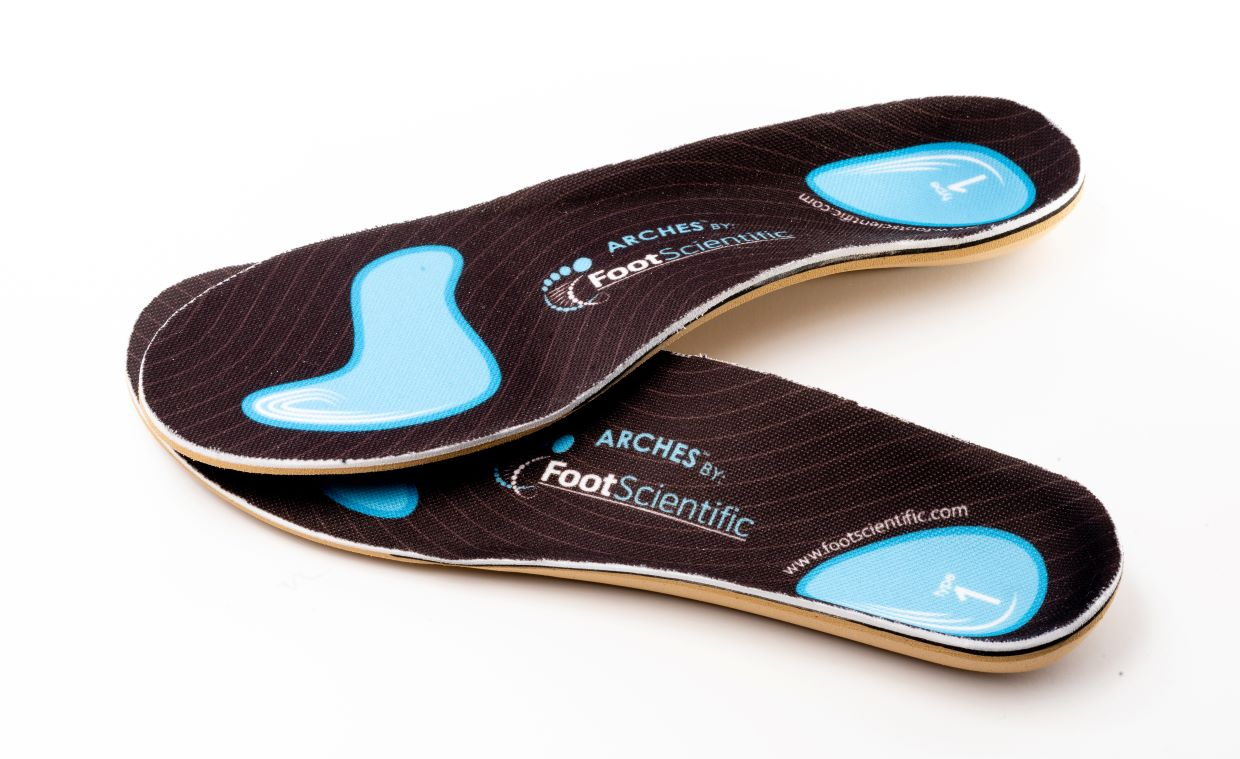
The Arches Type 1, 2 and 3 orthotics demonstrate corrective design:
- Type 1: visible 3° medial heel posting
- Type 3: visible 3° lateral heel posting
- All types: cork amalgam base maintains firm structure under load
- Material combination: cork base for control, EVA top layer for comfort
- More aggressive correction available: for Type 1 and Type 3, additional posting wedges (2 to 4 percent) are available for purchase with the orthotics
- Cork amalgam advantage: cork amalgam (over plastic or carbon fiber) accommodates idiosyncratic elements of the patient's foot for comfort over time without losing its corrective structure under load
Surgeon-to-Patient Guidance
Making informed decisions about orthotic treatment requires understanding clinical decision-making processes. Dr. Faux shares guidance on asking the right questions of your healthcare provider and navigating treatment options.
Walking into an orthopedic appointment without the right questions means you might leave without the information you need to make good decisions.
About your diagnosis
- "What is my specific foot type: pronation (flat foot), neutral or supination (high arch)?" Determines which orthotic type you need.
- "How severe is my deformity or condition?" While most conditions of flat feet and high arches can be treated effectively with pre-fabricated orthotics, extremely aggressive levels of severity may be outside the range of correction a pre-fab offers and will need customized solutions.
- "Is my deformity flexible or rigid?" Flexible deformities respond better to orthotics.
About treatment recommendations
- "Do I need custom orthotics, or would high-quality prefabricated orthotics work for me?" Can save $300-500 if prefabricated is appropriate.
- "What degree of heel posting do I need?" Typical: 3-5° medial posting for flat feet, 3° lateral posting for high arches. A "posting" is essentially a wedge shaped tilt to the foot.
- "Should my orthotics be corrective or accommodative?" The best option is to purchase an orthotic that reflects your foot type: flat arch, neutral arch or a high arch. This is foundational. An accommodative orthotic, typically designed to simply give a soft landing, can worsen the condition of a foot that needs correction.
About timeline and expectations
- "How long before I should expect improvement?" Typical: 2-4 weeks for initial improvement, 8-12 weeks for maximum benefit.
- "How many hours per day should I wear the orthotics initially?" Typical: start with 2-3 hours daily, gradually increase over 1-2 weeks.
- "Is some initial discomfort normal?" Mild muscle soreness as your body adjusts is normal.
About activity and lifestyle
- "Do I need to modify my activities while my condition improves?" Continued high-impact activity can delay healing.
- "What type of shoes work best with orthotics?" Typical: supportive shoes with removable insoles, good heel counter.
- "Should I wear orthotics in all my shoes?" Typical: yes, in all closed-toe shoes worn more than an hour.
About long-term management
- "How often do orthotics need to be replaced?" Typically one year of daily use.
- "Will I need to wear orthotics forever, or can my foot be retrained?" Most structural deformities require long-term orthotic use.
- "If conservative treatment does not work, what are my other options?" Understanding the treatment progression, which moves from mild correction all the way to surgical interventions.
Red flags: questions your provider should answer
If your provider can't or won't answer these questions, consider seeking a second opinion:
- Dismisses all prefabricated orthotics without evaluating your specific case
- Providers get hefty commissions on expensive custom orthotics even though research does not give them a discernible advantage over high-end pre-fabs across studies and in most cases.
- Can't explain what degree of posting you need or why
- Doesn't assess your foot type or severity of deformity
- Provides only custom orthotics without discussing alternatives
- Can't explain expected timeline or what "success" looks like
Condition-specific questions
If you have plantar fasciitis, also ask:
- "Is my plantar fasciitis related to my foot type?"
- "Besides orthotics, what stretches or exercises should I do?"
- "Should I use night splints or wrap my foot along with orthotics?"
If you have Posterior Tibial Tendon Dysfunction (PTTD), also ask:
- "What stage is my PTTD (1, 2, 3 or 4)?"
- "Can prefabricated orthotics work for my stage, or do I need custom?"
- "How critical is early intervention to prevent progression?"
If you have knee osteoarthritis, also ask:
- "Will lateral wedge orthotics (for example those for high arches) help my knee pain even though the problem is in my knee, not my foot?"
- "How do orthotics compare to other conservative treatments for knee OA?"
What to bring to your appointment
- Your most-worn shoes (doctor can assess wear patterns)
- Current orthotics if you have them
- List of activities you do regularly
- Timeline of when symptoms started and what makes them better or worse
- This list of questions, written down
What to leave with
- Clear diagnosis of your foot type
- Specific orthotic recommendations (custom vs. prefab, type, degree of posting)
- Written break-in protocol
- Timeline for follow-up if symptoms don't improve
- Activity modification guidelines