

Walking Again After Surgery
How the Elevate 360° Helps Patients Recover from Spinal Injuries, Stroke and Surgery
Three and a half months after his stroke, Roger Dilling is walking nearly normally. His physical therapist found the Elevate online. The first time he tried it, everything changed.
The Problem: Drop Foot After Surgery or Injury
Drop foot is one of the most common complications after spinal surgery, stroke or traumatic injury. Nerve damage prevents the foot from lifting properly. Without treatment, patients trip, fall and often stop walking altogether.
The standard solution? A rigid plastic AFO that locks the ankle in place. It prevents falls but makes normal movement nearly impossible.
J. Phillips' 86-year-old mother lived with drop foot from back surgery for over 40 years:
"Her doctor wanted her to wear a foot brace that has the rigid post and rigid pad that fits into a shoe. She found the rigid device very uncomfortable and it put a lot of pressure on her toes causing pain."
There had to be a better way. There is.
The Elevate 360° Solution: Support Without Restriction
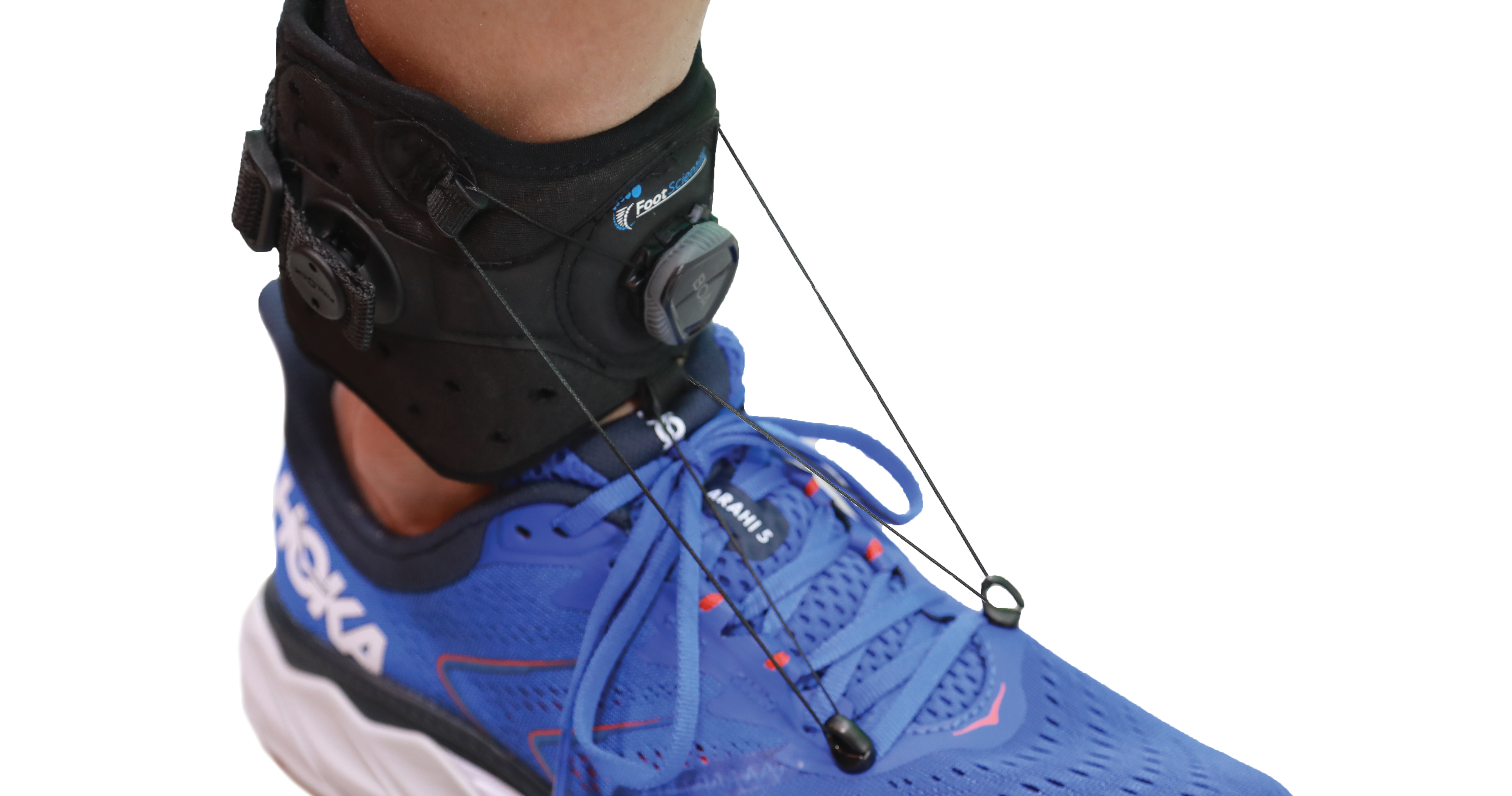
The Elevate 360° provides dorsiflexion support from the outside. No rigid plastic shell inside your shoe. No locked ankle. Just adjustable tension you control with the BOA® dial.
Physical therapists across the country are discovering what patients already know: this brace actually works with your recovery instead of against it.
Real Recovery Stories
Roger Dilling: Stroke Recovery in South Carolina
At the end of March, Roger suffered a moderately severe stroke on his right side. Learning to walk again meant dealing with serious drop foot.
"My therapist tried several of the more conventional drop foot braces and while they offered some help, the results were less than satisfactory. She then started doing some research online and found your Elevate Drop Foot Brace and ordered one for the rehabilitation facility to try."
The difference was immediate:
"The first time I used it there was all the difference in the world in my walking. After using it in therapy for several days, I ordered one of my own and have been using it ever since. It has helped my recovery immensely."
Result: "Now, only three and a half months after my stroke, while I still use a cane, I am walking nearly normally, do not have any drop foot problems and have been able to significantly reduce the amount of tension I need on the brace."
- Roger Dilling, Salem, SC
J. Phillips' Mother: 40+ Years of Drop Foot
At 86 years old, she had lived with drop foot from back surgery for over four decades. Falls had resulted in facial bruising, dental repairs, a broken shoulder and pelvic fractures.
The family found the Elevate while searching for alternatives to her painful rigid brace:
"On the second day of wearing the brace she was walking with almost a normal gait and without having to think about picking up her left foot every step. As this brace allows her to bend her ankle forward, it is very easy on her foot, hip and back."
"She wore it to her occupational therapy session recently and her therapist was very impressed and excited over the product. The therapist mentioned that she had many clients that would benefit greatly as this brace is much more user friendly."
- J. Phillips
Kirt Breaux: Car Accident Recovery
A horrendous motor vehicle accident left 27-year-old Kirt with drop foot. At 290 lbs and needing to exercise to drop weight, he needed a brace that could keep up with his active lifestyle.
"After I went through (broke) 3 previous braces recommended by my doctor, I decided to give Elevate a go. It has changed everything for me."
Result: "At 290lbs, I can jog/walk a 16 minute mile with the aid of the Elevate Drop Foot Brace. I am ordering my second brace today. The first brace held up for a solid year with my active lifestyle."
- Kirt Breaux
Amazon Review: Trampoline Park Accident
"I WOULD GIVE MORE STARS IF I COULD!!!!"
"I tore 3 of 4 ligaments in my knee due to a trampoline park accident. I ended up with nerve damage causing paralyzes to my foot (drop foot). I was told that more than likely I would have drop foot for the rest of my life."
As a 34-year-old mom with an active 8-year-old, she refused to let a bulky brace slow her down. She Googled "wearing cute shoes with drop foot" and found the Elevate.
"My therapists were in awe when I introduced the Elevate brace to them. They saw my progress and immediately started directing their other patients to this wonderful brace. They would even schedule patient appointments around mine so they could demonstrate how easy it was to install and attach the brace to their shoes."
⭐⭐⭐⭐⭐ 5 Stars - Verified Amazon Purchase, 2017 (13 people found helpful)
Clinical Evidence: The Korean Study
It's not just patient testimonials. A peer-reviewed clinical study examined the Elevate's effect on stroke patient gait improvement.
Study: "Application of Removable Ankle-Foot Orthosis for the Improvement of Gait in Stroke Patients"
Subject: 64-year-old male with hemiparalysis on left side
Assessments: TUG (Timed Up & Go), FGA (Functional Gait Assessment), velocity, cadence, stride length and sway angle measurements using 3-axis accelerometer
Result: All gait variables improved after application of the removable AFO.
Conclusion: "Use of appropriate orthoses positively influences improvement of ambulatory abilities for stroke patients and brings them to pre-disease levels of functioning and quality of life."
What Physical Therapists Are Saying
"I am a physical therapist specializing in spine rehabilitation. I have a patient that has drop foot and today she came in using the Elevate drop foot brace and I was impressed at how good she looked and ambulated. Her balance and quality of gait improved significantly. Very simple to adjust and to install in all kinds of shoes. Great product I recommend it!!"
- Ricardo, Physical Therapist
Expert Insight: Dr. Rob Faux
|
Dr. Rob Faux, MD | Board-Certified Orthopedic Surgeon |
"Recovery from spinal injury, stroke or surgery is a process. The brace you use during that process matters.
Rigid AFOs prevent falls but they also prevent the natural ankle movement that's essential for gait retraining. Patients develop compensatory patterns that can cause secondary problems in the hip, knee and lower back.
The Elevate's adjustable tension allows therapists and patients to gradually reduce support as strength returns. That's not possible with a rigid brace. Roger Dilling's experience of reducing tension over time is exactly what we want to see in recovery."
Why Therapists Recommend the Elevate for Recovery
Adjustable Support: Start with maximum tension. Reduce it as you get stronger. The BOA dial gives you precise control.
Natural Gait Pattern: External design allows more natural ankle movement than rigid AFOs. Better for long-term recovery.
Durable Construction: Kirt broke 3 braces before the Elevate. His held up for a solid year at 290 lbs with an active lifestyle.
Works With Any Footwear: Sneakers during PT. Dress shoes for returning to work. Sandals at home. One brace, all your shoes.
Easy for Caregivers: Simple enough for family members to help apply. No complicated strapping systems.
Ready to Start Your Recovery?
The Elevate 360° Drop Foot Brace comes with everything you need: anchor hook kits for multiple shoes, replacement cord and easy-to-follow instructions.
60-Day Satisfaction Guarantee + Free Returns
Shop at footscientific.com or find us on Amazon.
Questions? We're here to help. Email admin@footscientific.com or call 801-666-6468.
Common Questions
Yes. Roger's therapist actually ordered the first one for the rehab facility. The adjustable tension means your PT can customize support for different exercises.
Absolutely. Roger was able to "significantly reduce the amount of tension" as his recovery progressed. The BOA dial makes micro-adjustments easy.
Kirt weighs 290 lbs and jogs regularly. He broke 3 other braces. His Elevate lasted a full year before he ordered a backup.
J. Phillips' mother had drop foot for over 40 years. On day two with the Elevate she was walking with an almost normal gait.