

High Arches Don't Have to Hurt

How the Type 3 Orthotic Helps People with Cavovarus Feet Avoid Surgery and Stay Active
Tyler's doctor told him he had the highest arches he'd ever seen. He was facing major surgery on both feet. Instead, he got a pair of Type 3 orthotics. Today he walks and runs without pain.
The Problem: When High Arches Cause Pain Everywhere
High arches look great. But biomechanically, they're a problem.
When your arch is too high, your foot supinates. That means weight rolls to the outside edge instead of distributing evenly. The result? Stress concentrates in all the wrong places.
People with high arches often experience ankle instability and frequent sprains, pain on the outside of the foot, plantar fasciitis, shin splints, and knee, hip and back pain from compensation patterns.
Standard orthotics don't help. They're designed for flat feet. Putting arch support under an already-high arch just makes things worse.
The Type 3 orthotic is different. It's specifically engineered to bring the supinated foot back to neutral.
The Type 3 Solution: Neutralize, Don't Support
Most orthotics try to support your arch. The Type 3 does something different. It neutralizes your foot position against the ground.
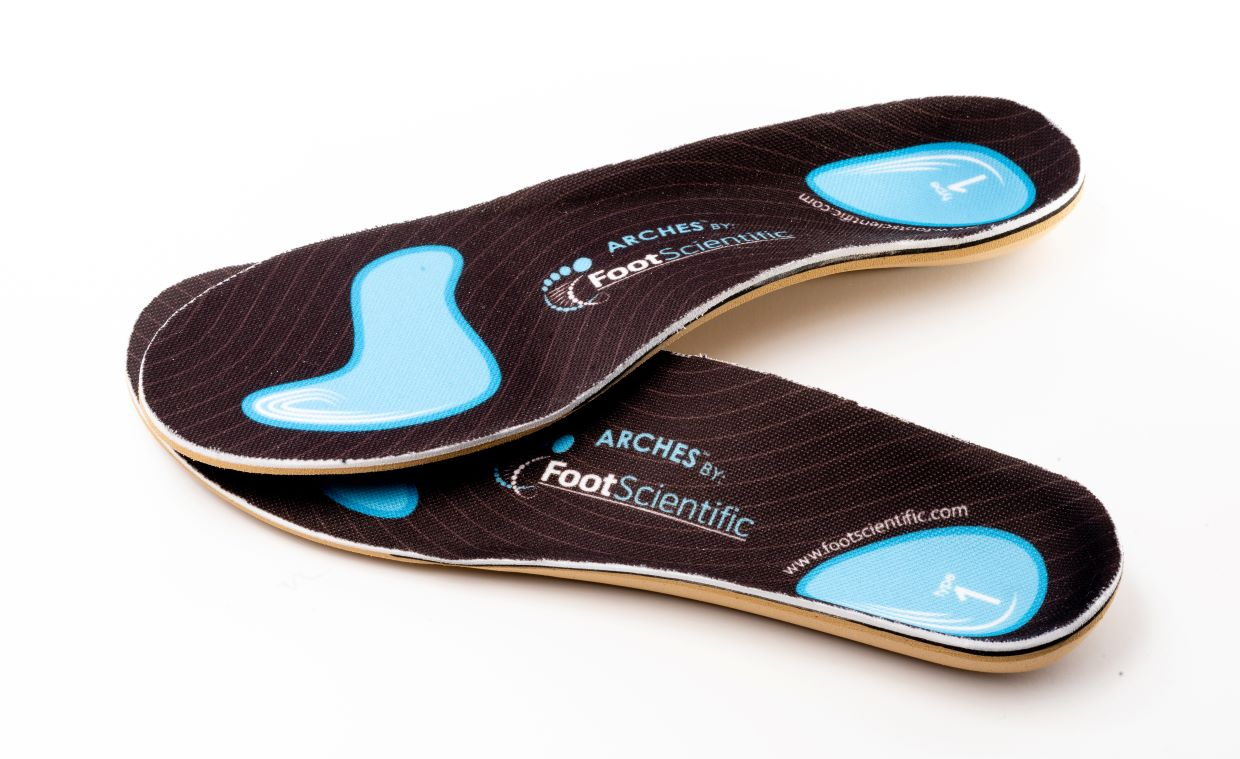
The design includes a 3° lateral heel wedge that runs the entire length of the orthotic. This shifts your weight distribution from the outside edge back toward center. First metatarsal relief takes pressure off the ball of your foot.
The result? Your foot strikes the ground the way it's supposed to. Large muscle groups engage properly. Small muscles and tendons stop working overtime.
Real Stories: Surgery Avoided, Lives Changed
Tyler M: From Surgery Recommendation to Walking and Running
Tyler served a mission for the LDS Church in Patagonia, Chile. Walking the streets eight or more hours every day.
"After eight months of this beating, I developed multiple chronic stress fractures and tendon damage in my right foot. They found the cause to be high arches. The highest that my doctor had ever seen."
He was sent home from Chile immediately. Major surgery to correct problems in both feet was on the table.
"Instead of an invasive surgery, my doctors here decided to have me use the Orthotics by FootScientific. I needed the Type 3 Orthotic, which acts as a balancing agent for my foot. It distributes the weight and shock to my foot correctly."
Result: "Using these orthotics prevented me from needing invasive surgery, and today I am able to walk and run."
- Tyler M, Orem, UT
Patricia Valdez RN: 90% Pain Reduction in One Week
Patricia had sore feet, ankle problems and knee pain for years. She'd already had surgery on one foot. When she went to Harborview foot and ankle clinic expecting to need another surgery, her doctor diagnosed high arches and sent her to physical therapy.
"The PT gave me an orthotic to wear which was helpful but still I had pain. The next time I went in she suggested I try the Type 3 orthotic made by Footmind."
One week later:
"I have been wearing it for about one week now and my foot, ankle and knee pain are 90% better. My feet feel grounded and cushioned. I find I am holding my whole body with less tension. I have started walking again for exercise and am happy to say I have very little pain."
- Patricia Valdez R.N., M.S.W.
Anastasia Surkova: World-Ranked Tennis Player
Anastasia's tennis resume is impressive: #1 in the world at age 14, Junior's Australian Open, Wimbledon, BYU scholarship. But during her university years, overuse and high arches caught up with her. Broken sesamoid bones. Surgery on her right foot.
Today she teaches tennis 35-45 hours a week. That's a lot of time on your feet in lightweight shoes with minimal support.
"I put the orthotics in immediately and even though my feet were still achy, I felt the support in all the spots that I need, especially in my high arch. I taught for a total of 10.5 hours today, but as I wore the orthotics for the last couple of hours and just took them off, I feel instant relief."
"I know that it usually takes a couple of weeks for the orthotics to take shape of the foot, but I honestly felt instant relief, after having acute pain today."
- Anastasia Surkova, Former #1 World Junior Tennis
15 Years of Ankle Instability: Finally Fixed
Some stories show what happens when high arches go untreated for years:
"I have been using the Type 3 orthotic for about 6 months now after a visit to Dr. Faux, and to put it simply... it has been absolutely life-changing. I was struggling with some serious ankle instability that started during my High School tennis days and gotten progressively worse until I went in for my appointment. About 15 years in total."
"It got so bad that I'd be simply walking across the lawn, or even sometimes on the sidewalk and my ankle would just roll over and collapse."
After one week with the Type 3:
"After about a week though, my ankles were rock solid. I could jog across the grass, walk on uneven hiking trails, anything... my ankles would not give out."
"As a side-bonus: I've had some trouble with plantar fasciitis that came and went dependent on how much running I was doing at the time. Turns out I no longer need those add-ins and the Type 3's totally take care of that as well."
"I honestly will not wear a pair of shoes without them in it. My pain is gone. I can actually play tennis again, which I had given up due to my ankles."
- Type 3 Customer
Athletes Finding Relief
Mason Ming, Basketball Player: "I normally play basketball 3 or 4 times a week but had to cut back once I started getting shin splints. After putting new Type 3 FootScientific insoles into my basketball shoes, I was able to play 4 times a week without any sign of shin splints or any of the pain that I felt before."
W.W. from Utah: "The high arch supination has made a huge difference in my life. From the moment I first used them, I immediately felt a shift in my stance and posture. Long term hip pain seems to be miraculously alleviated. I can't see living without them."
What Podiatrists Are Saying
Linda Schmidt showed her Type 3 orthotics to her podiatrist:
"I just visited the podiatrist and showed her your number 3 cavovarus orthotics. Dr. Ronna asked me to step on one, checked my foot positioning, and declared that they were good for my feet. She marveled at your orthotics, loved that they were cork, and said she was going to introduce them to her patients."
- Linda Schmidt (referencing Dr. Theresa Ronna, Kayal Orthopedics, Northern New Jersey)
Expert Insight: Dr. Rob Faux
Dr. Rob Faux, MD | Board-Certified Orthopedic Surgeon
"High arches are one of the most misunderstood foot types. Patients come in having been told they have 'great arches' their whole lives. Then they start developing ankle sprains, plantar fasciitis, shin splints, knee pain.
The problem isn't the arch itself. It's the supination pattern that comes with it. When your foot rolls outward at heel strike, you lose the natural shock absorption of a properly aligned gait. Stress concentrates on structures that weren't designed to handle it.
The Type 3 orthotic uses a lateral wedge to shift ground reaction forces back toward neutral. It's a biomechanical correction, not just cushioning. That's why patients like Tyler can avoid surgery and athletes like Anastasia can keep performing at high levels."
Conditions the Type 3 Addresses
Ankle Instability: The lateral wedge brings your foot to neutral, reducing the outward roll that causes sprains.
Outer Foot Pain: Redistributes weight that's been concentrating on the lateral edge.
Plantar Fasciitis: Proper alignment takes strain off the plantar fascia.
Shin Splints: Corrected foot strike reduces tibial stress.
Knee Pain (especially medial compartment): The 3° lateral wedge shifts forces away from the inner knee.
Metatarsalgia: First metatarsal relief takes pressure off the ball of your foot.
Ready to Stop the Pain?
The Arches Type 3 orthotic is specifically designed for high arches and supination. Cork and foam construction for comfort. 4-layer design for durability.
60-Day Satisfaction Guarantee + Free Returns
Shop at footscientific.com or find us on Amazon.
Not sure which type you need? Take our free foot type quiz or email admin@footscientific.com for help.
Common Questions
Try the wet footprint test: Step on concrete with a wet foot. If you see mostly heel and ball with a very thin or no connection in the middle, you have high arches. If your shoes wear down on the outside edge, that's another sign.
Standard orthotics are designed to support flat or neutral arches. Adding more arch support to an already-high arch can actually make supination worse. The Type 3 works differently. It doesn't support the arch. It brings the whole foot to neutral through lateral correction.
Many customers report immediate relief, like Anastasia after her 10.5 hour teaching day. Patricia saw 90% improvement in one week. For long-standing issues like the 15-year ankle instability case, results came within a week of consistent use.
Yes. Customers use Type 3 orthotics in tennis shoes, basketball shoes, running shoes, hiking boots and dress shoes. Just remove the factory insole and replace with the Type 3.
Custom orthotics mold to your existing foot shape. If your foot is supinated, you get an orthotic that matches your supination. The Type 3 is biomechanically engineered to correct supination with its lateral wedge design. Plus it costs a fraction of custom orthotics, which can run $500+.