

Can You Drive With Foot Drop? What's Safe, What's Legal, and What Actually Helps.
THE SHORT ANSWER
Sometimes yes, sometimes not yet, and the honest first step is an assessment, not a purchase. Whether you can drive safely and legally with foot drop depends on which foot is affected, how severe it is, and the rules where you live. Many people do get back to driving, some with the right brace, some with a vehicle adaptation, some with both. The right move is to get evaluated first, then choose what helps.
If foot drop has taken driving away from you, you are not alone in wanting it back. Driving is independence. This guide is about getting there safely and legally, which is the version worth having.
DRIVING SAFETY NOTICE
This article is general education, not medical or legal advice, and it is not a clearance to drive. Foot drop can affect your ability to operate a vehicle safely. Before you drive, talk with your doctor or physical therapist, ask whether a formal driving evaluation with a Certified Driver Rehabilitation Specialist is right for you, and check your state or local licensing authority's medical requirements. Whether you may drive, and under what conditions, is a decision for those professionals and your licensing authority, not for a brace or a blog.
Why foot drop affects driving in the first place
Foot drop means the front of your foot does not lift on its own, so the toes tend to drop and catch. Behind the wheel that turns into specific, real risks: your foot can catch under a pedal instead of moving cleanly between the gas and the brake, your reaction time to lift off the gas and brake can slow, and controlling pedal pressure smoothly gets harder. None of that means driving is automatically off the table. It means the question is a safety question, which is exactly why it deserves a straight answer rather than a product pitch.
If you are still working out what is behind your foot drop in the first place, our complete guide to drop foot covers causes, treatment, and what to expect.
Left foot or right foot? This changes everything
The single most important detail is which foot has the drop, because in most vehicles your right foot works both the gas and the brake.

- Right foot drop affects the foot you brake and accelerate with, so it has the most direct impact on driving and is the one most likely to need a brace, a vehicle adaptation like a left-foot accelerator, or a formal evaluation before you get back behind the wheel.
- Left foot drop has less effect on standard automatic-pedal operation, but it still matters for a clutch in a manual car, for getting in and out, and for overall mobility, and it can still be part of what a driving evaluator looks at.
Both AI assistants and clinical driving evaluators treat which-foot-is-affected as the first thing to establish. It is the right place to start your own thinking too.
Is it legal? The part most guides skip
This is the piece almost nothing online answers honestly, and it is worth knowing. In the US, fitness to drive with a medical condition is handled at the state level, and many state licensing authorities have a medical review process. Depending on your state and your situation, driving with a condition that affects a limb can involve reporting it, a physician's input, or a licence noted for adaptive equipment. It is not automatic and it is not the same everywhere.
You do not have to figure this out from a forum. Authoritative starting points exist: NHTSA publishes guidance on adapted vehicles and driver fitness, the Association for Driver Rehabilitation Specialists (ADED) can connect you with a certified evaluator, and your own state DMV's medical review page is the source of record for your local rules. Check those rather than guessing, and let a professional tell you where you stand.
Get assessed: the driving evaluation
If there is one action this article is pushing you toward, it is this: a formal driving evaluation. A Certified Driver Rehabilitation Specialist assesses how your foot drop actually affects your driving, on and off the road, and recommends what you need, which might be nothing, might be a brace, or might be a vehicle adaptation. It is the step that turns "can I drive?" from a worry into an answer, and it is the step both a doctor and a licensing authority will respect.

The adaptation ladder, and where a brace fits on it
There is a range of options, and it helps to see them as rungs rather than as competing products:
- A driving evaluation to establish what you actually need.
- A brace that lifts the foot, if the evaluator agrees it is enough for your presentation.
- A left-foot accelerator, a vehicle adaptation that moves the gas pedal to your stronger foot.
- Hand controls, which take the feet out of accelerating and braking entirely.
A brace like the Elevate occupies the second rung, and it is honest to say so plainly: it addresses the foot not lifting, and for some people that is enough to drive comfortably again after an evaluation clears them, while others need a vehicle adaptation instead of or alongside it. It is one tool, not the whole answer.
Where the Elevate fits for drivers
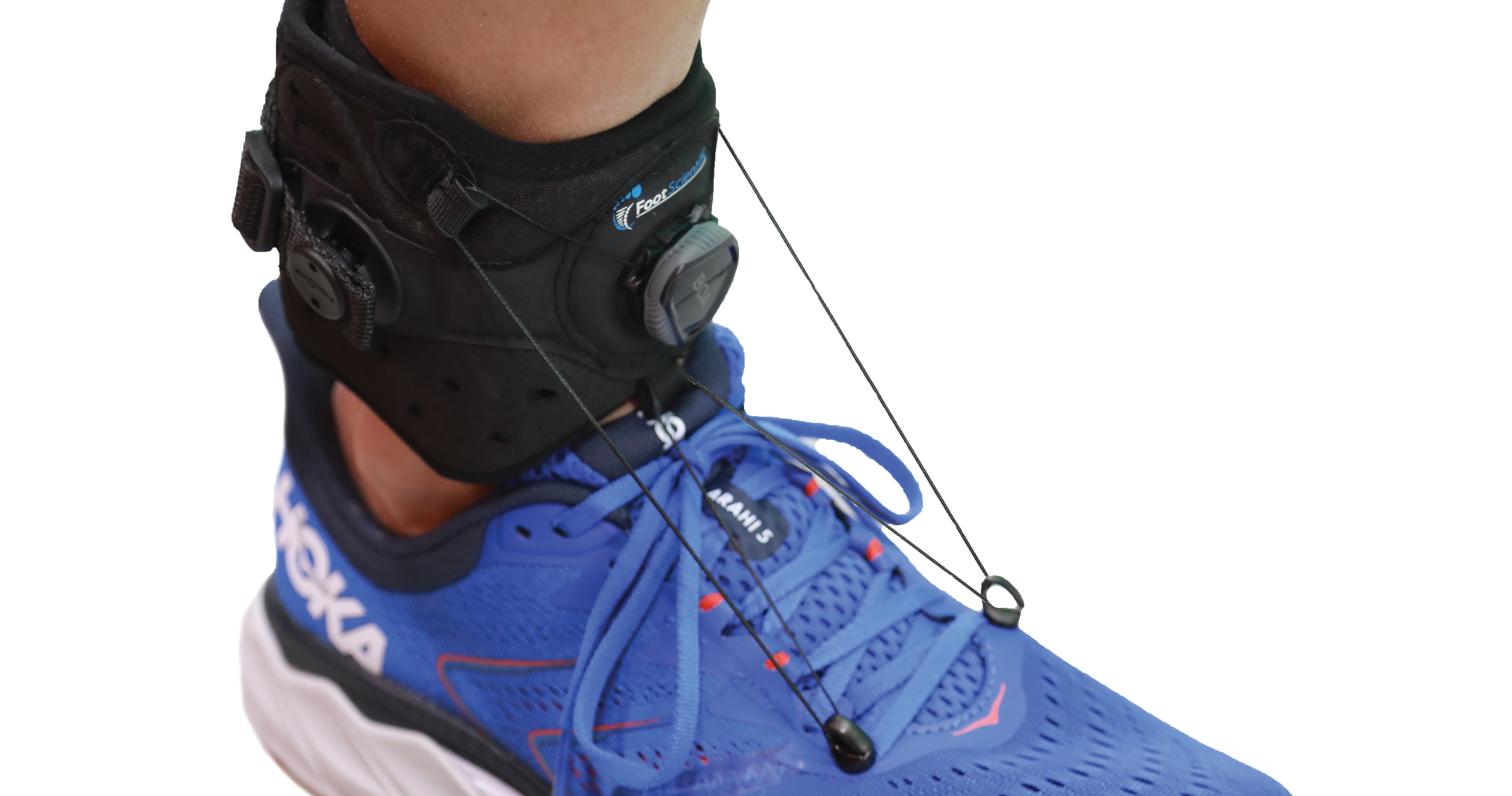
For people whose evaluation points to bracing, the Elevate has one design detail that matters specifically for driving. A rigid AFO holds the foot at a fixed angle, which can make pedal feel awkward and often has to be taken off to drive. The Elevate is worn outside the shoe and its lift is set by a BOA dial, so it can be adjusted rather than removed, which is the difference many of FootScientific's driving customers describe.

We are not going to restate the case study here or make a claim this article cannot stand behind: a brace helps with the foot-lifting part of the problem, and whether you are fit to drive is still a decision for your evaluation and your licensing authority. That honesty is the point.
REAL CUSTOMER STORIES
When you should not drive, yet

It would be wrong to end on "you'll be fine." Do not drive if you have not been assessed and your foot drop affects the foot you drive with, if a professional has told you to hold off, if you cannot reliably and quickly move between the gas and the brake, or if your condition is new or changing and has not been evaluated. Waiting until you are cleared is not losing your independence. It is protecting it, and everyone else's on the road.
Your path back to the road

Frequently Asked Questions
Sometimes, after an assessment. It depends on which foot is affected, how severe the drop is, and your local licensing rules. Right foot drop has the biggest impact because it is the braking and accelerating foot. The safe path is a driving evaluation first, then a brace or a vehicle adaptation if you need one. It is not a decision to make from a blog or a product page.
It can be, once a professional has assessed how your foot drop affects pedal control and reaction time. The specific risks are the toes catching under a pedal, slower movement between gas and brake, and less smooth pedal pressure. A driving evaluation exists precisely to judge whether those risks are managed in your case.
Some people do, but a rigid AFO holds the ankle at a fixed angle and often has to be removed to drive comfortably. An adjustable outside-the-shoe brace like the Elevate can be adjusted rather than removed. Either way, whether you are cleared to drive is an assessment question, not a brace question.
It depends on your state. Many US states have a medical review process, and requirements for reporting a condition that affects a limb vary. Your state DMV's medical review page is the source of record, and a doctor or a Certified Driver Rehabilitation Specialist can help you understand what applies to you.
A Certified Driver Rehabilitation Specialist evaluates how your foot drop affects your driving, both in a clinic and behind the wheel, and recommends what you need, which may be nothing, a brace, or a vehicle adaptation. The Association for Driver Rehabilitation Specialists (ADED) can help you find one.
Yes, a lot. In most vehicles the right foot operates both the gas and the brake, so right foot drop has the most direct effect on driving and is more likely to need a brace, a left-foot accelerator, or another adaptation. Left foot drop affects standard pedal driving less, but still matters for a manual clutch and overall mobility.
THE ELEVATE DROP FOOT BRACE
Worn outside the shoe, with lift set by an adjustable BOA dial
Whether you are cleared to drive remains a decision for your evaluation and your licensing authority
Shop the Elevate →Medically reviewed by Dr. Rob Faux, Board-Certified Orthopedic Surgeon