


Arches Insoles Type 3
For the best fit, if you're between sizes, we recommend sizing up.
Common Injuries Reduced with Type 3
High-arched feet place abnormal stress on specific areas. Type 3 addresses the biomechanical root cause of these conditions.
What's Your Foot Type?
Find Your Type
Type 1: Pronating, Overpronating, Flat Foot, Fallen Arches
Type 1's correction increases comfort, enhances performance, and prevents injuries. Clinical issues common to flat feet such as plantar fasciitis, ankle and knee pain, or pain from undue pressure on the inside of the foot are relieved.
Type 2: Neutral Arch
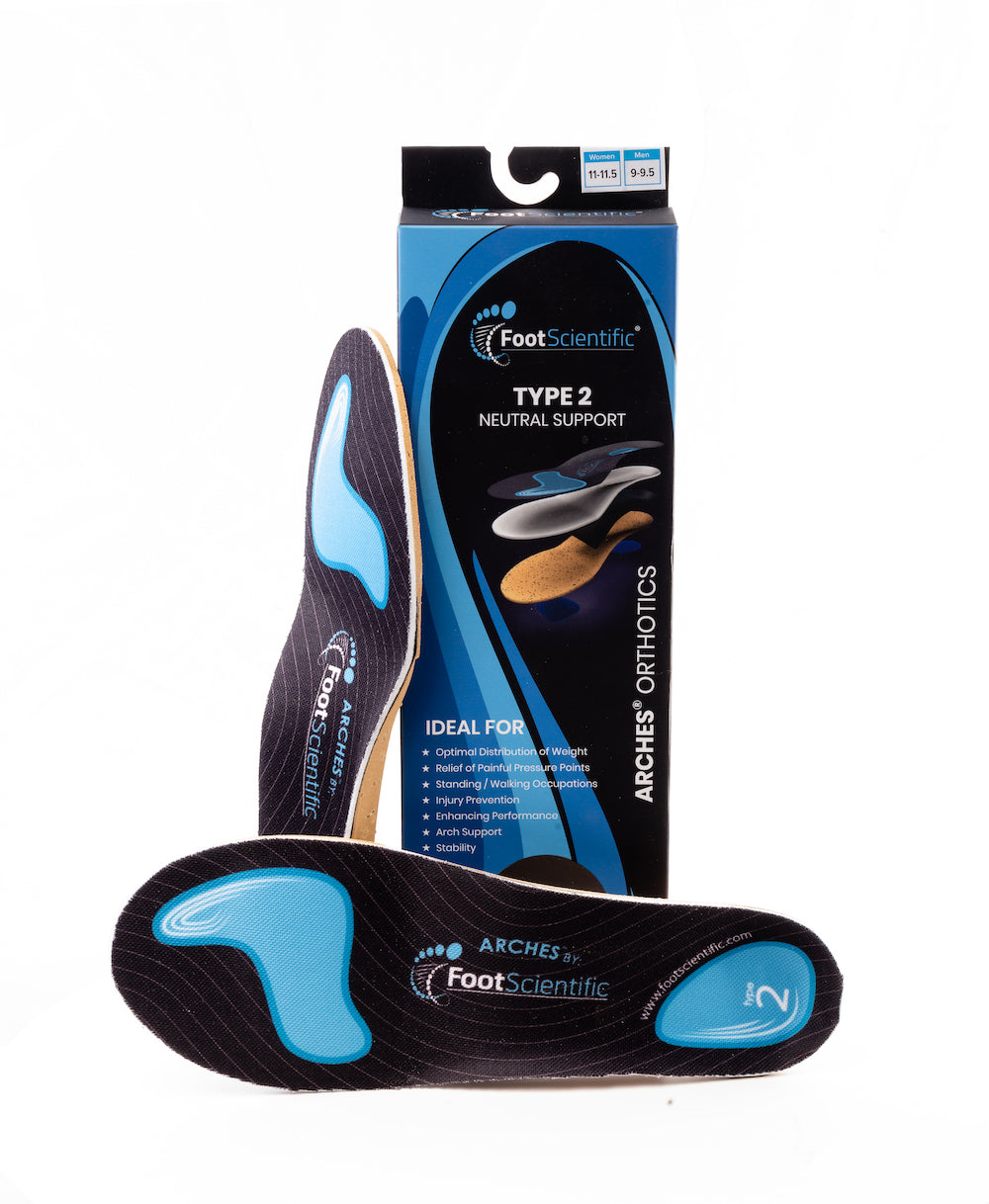
Type 2 is for additional arch support, weight distribution off pressure points, and foot stabilization for a more responsive and comfortable foot.
Type 3: Supination, High Arch, High Rigid Arch, Cavovarus Foot, Inner Knee Arthritis
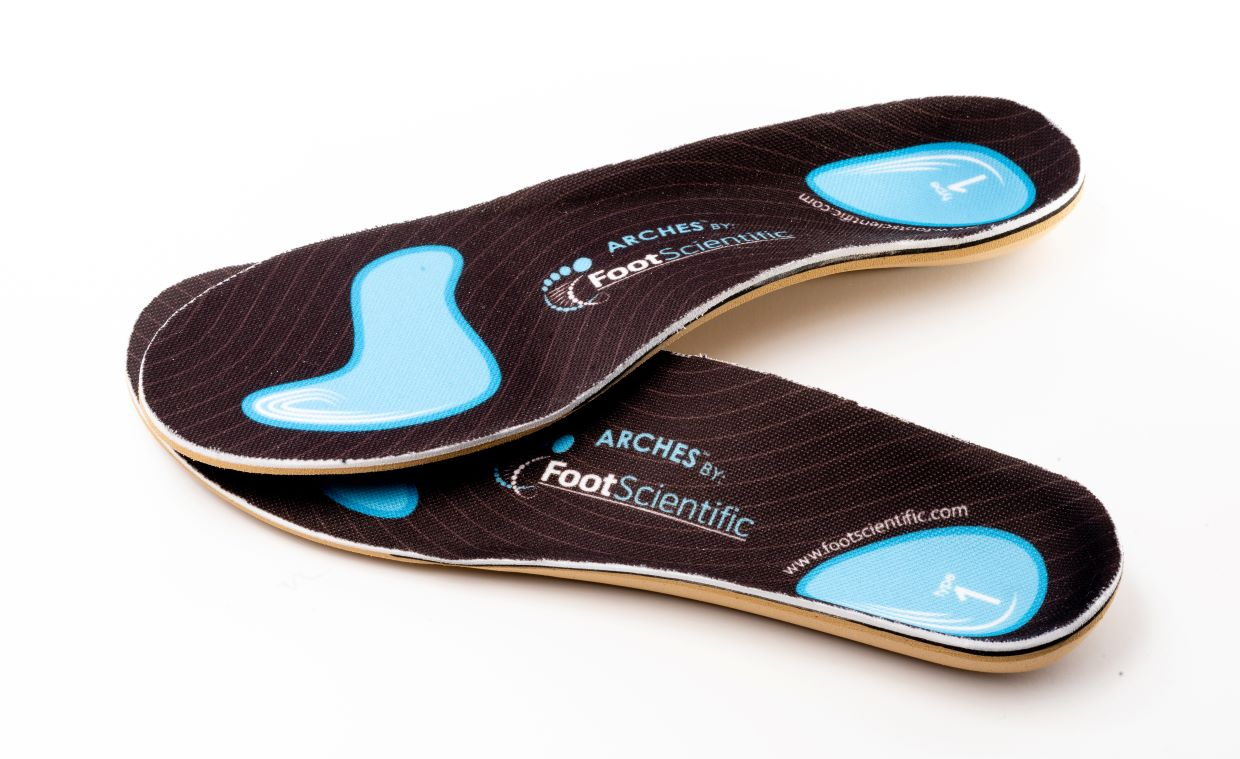
Type 3 correction results in a more flexible foot, better pivot, and minimizes outer-foot stress fractures and ankle rolling. It helps open space at the inner knee to lessen the pain of inner-knee arthritis. The 3° lateral wedge and forefoot shape allow the over-flexed big toe to drop into a comfortable position while tilting the heel out of its abnormal position. This patented bio-mechanical combination neutralizes the foot for immediate relief of discomfort and unlocks the “subtalar joint” for greater foot flexibility.
Before & After
4-Layer Construction
Each pair is designed with 4 layers:
Allows for shock absorption, maintains the alignment, and maintains the correction of the orthotic.
3° Lateral Wedge Recessed First MetatarsalStabilizes the heel, providing comfort and support.
Allows for persistent shock absorption and comfort of the wearer.
Works to control perspiration, odor control, and transitional cushioning.
How to Install Your Arches Orthotics
Remove your current shoe lining/insole and replace it with the Arches Orthotics.
Trim the end to fit if needed. This step is usually unnecessary.
To ensure correction and extend the life of the orthotic, place a different pair of orthotics in each shoe. Replace every 6-12 months or as needed based on use.
Please trial for 14 days to assess comfort and performance.
Subscribe on your next purchase to maintain the ongoing benefits of your orthotics.
Need More Correction?
Try the orthotics as is. If you find you need additional correction, consider our wedges for more aggressive correction (2-4% posting available).
Shop Type 3 Wedges →Expert Insights from Dr. Rob Faux
Board-Certified Orthopedic Surgeon specializing in corrective foot biomechanics
Why do high arches need different orthotic support than flat feet?
High-arched (supinated or cavovarus) feet and flat (pronated) feet have opposite biomechanical problems, so adding more arch support to a high-arched foot can actually make things worse.
A pronated foot rolls inward and the arch collapses. It needs medial posting to bring the heel back to neutral. A supinated foot does the opposite: the foot rolls outward, weight concentrates on the outer edge, and the arch is already elevated.
What Type 3 does differently:
- 3° lateral heel wedge tilts the heel out of its abnormal supinated position
- Recessed first metatarsal area allows the over-flexed big toe to drop into a comfortable, functional position
- Neutralizes without adding arch height, which would only worsen outer-edge pressure
This is why standard "high arch support" insoles from the drugstore often feel worse over time for high-arched patients. They address the symptom, not the mechanics.
Can Type 3 help with knee arthritis or outer knee pain?
High-arched, supinated feet contribute directly to inner knee compartment wear. When the heel tilts inward (varus alignment) and weight loads disproportionately onto the medial side of the knee joint, the medial cartilage takes on more stress than it was designed to handle over time.
The 3° lateral wedge in Type 3 is designed to counter this by neutralizing heel position, which in turn reduces the varus load on the inner knee and opens space at the inner compartment.
For patients with early to moderate inner knee arthritis or chronic outer knee/IT band pain tied to high-arch biomechanics, Type 3 is often the first biomechanical intervention recommended before more invasive options are considered.
How long should I expect corrective orthotics to last?
Corrective orthotics should be replaced every 6-12 months depending on use, body weight, and activity level. The cork amalgam base holds its corrective shape far longer than foam-only designs, which typically lose 40-60% of their structure within months, or carbon fiber designs, which quickly become uncomfortable.
For longer life, rotate pairs between shoes rather than moving one pair from shoe to shoe. The orthotic has time to decompress between wears, and correction is preserved longer.
Plan a 14-day break-in period. Comfort and correction build gradually as the foot adjusts to proper biomechanics.
Should I remove the insole that comes with my shoe before adding the Arches orthotics?
Yes. For maximum comfort and proper correction, remove the insole that came with your shoe and replace it with the Arches orthotic. Leaving the original insole in place will reduce space in the shoe and interfere with the corrective geometry of the Type 3.
Can I get the orthotics wet?
We recommend avoiding saturating the orthotics in water. Because they are made with a cork amalgam base, prolonged water exposure can affect the corrective properties and damage the material.
Light moisture from normal daily wear is not an issue. If the orthotics get damp, allow them to air dry fully at room temperature before using them again.
If I am between sizes, which size should I get?
Size up. The orthotic can be trimmed at the top if needed for a perfect fit, so the larger size gives you flexibility the smaller size does not.
Note that shoe sizes vary between brands, so fit in your shoe may differ slightly. The orthotic is designed to replace the factory insole, not stack on top of it.