

FootScientific Type 1 vs Dr. Scholl's: Which Orthotic Actually Fixes Flat Feet?
You're standing in the drugstore, looking at Dr. Scholl's insoles for your flat feet. They're $15-50, available right now, and the packaging promises "pain relief" and "custom fit." Meanwhile, you've heard about medical-grade orthotics that cost $70-150. Is there really a difference worth paying for?
The answer depends on what you're trying to accomplish. If you want temporary cushioning for mild discomfort, drugstore insoles can help. But if you have flat feet causing plantar fasciitis, knee pain, or other structural problems, there's a fundamental difference between these products that affects whether you'll actually get better.

What Dr. Scholl's Actually Does (And Doesn't Do)
Dr. Scholl's products use EVA foam as their primary material—the same stuff in flip-flops and yoga mats. It's soft, it cushions, and it feels comfortable when you first put it in your shoe.
Here's the problem: EVA foam compresses under body weight and stays compressed. A peer-reviewed study found that after just 10 days of regular wear, EVA insoles showed significant changes in thickness and pressure distribution. The forefoot region lost 20% of its thickness. The material doesn't bounce back.
When a podiatrist evaluated all 14 Dr. Scholl's Custom Fit orthotics (the $50 ones from the kiosk), the assessment was blunt: "They are so flexible that they collapse completely with a little hand pressure. Under body weight, they will all collapse." The conclusion? "Can function as cushioning, but really do not provide support."
The "Custom Fit" Problem
Dr. Scholl's kiosks promise "custom fit" based on a pressure scan of your feet. But there's a catch: you can get different results just by shifting how you stand on the machine. And more importantly, all 14 insole variations use the same flexible EVA construction that can't maintain corrective angles under load.
One certified pedorthist put it directly: "Don't fall into these Dr. Scholl's gimmicks. They are way overpriced, and essentially not a great product."

What Real Users Report
Consumer reviews consistently echo what the material science predicts. Users note the Dr. Scholl's insoles don't hold their shape after regular wear. Restaurant workers report they only last a few busy shifts. YouTube reviewers have documented visible compression and edge peeling after 12 months of use.
Why Material Science Matters for Flat Feet
If you have flat feet (overpronation), your arch collapses with every step. This stretches the plantar fascia, stresses your ankle and knee joints, and can cause pain throughout your lower body. Fixing this requires an orthotic that maintains its shape under your full body weight—not one that flattens out.

EVA Foam vs Cork Amalgam
Cork has a unique cellular structure—millions of tiny gas-filled chambers—that gives it elastic memory. It compresses under load, then springs back. This isn't marketing—it's measurable material science. Cork-based orthotics "hold their comfortable shape over time" because the material physically rebounds rather than permanently deforming.
The Medial Posting Difference
Here's where the functional gap becomes unbridgeable.
Flat feet need medial heel posting—a small wedge on the inside edge that tilts your heel outward, bringing it to neutral and reducing arch collapse. Research shows 3-5 degrees of posting effectively controls excessive pronation.
Dr. Scholl's products mention "stability guardrails" but provide no degree specifications for correction. And it wouldn't matter anyway—EVA foam can't maintain posting angles under body weight. The wedge just squishes flat.

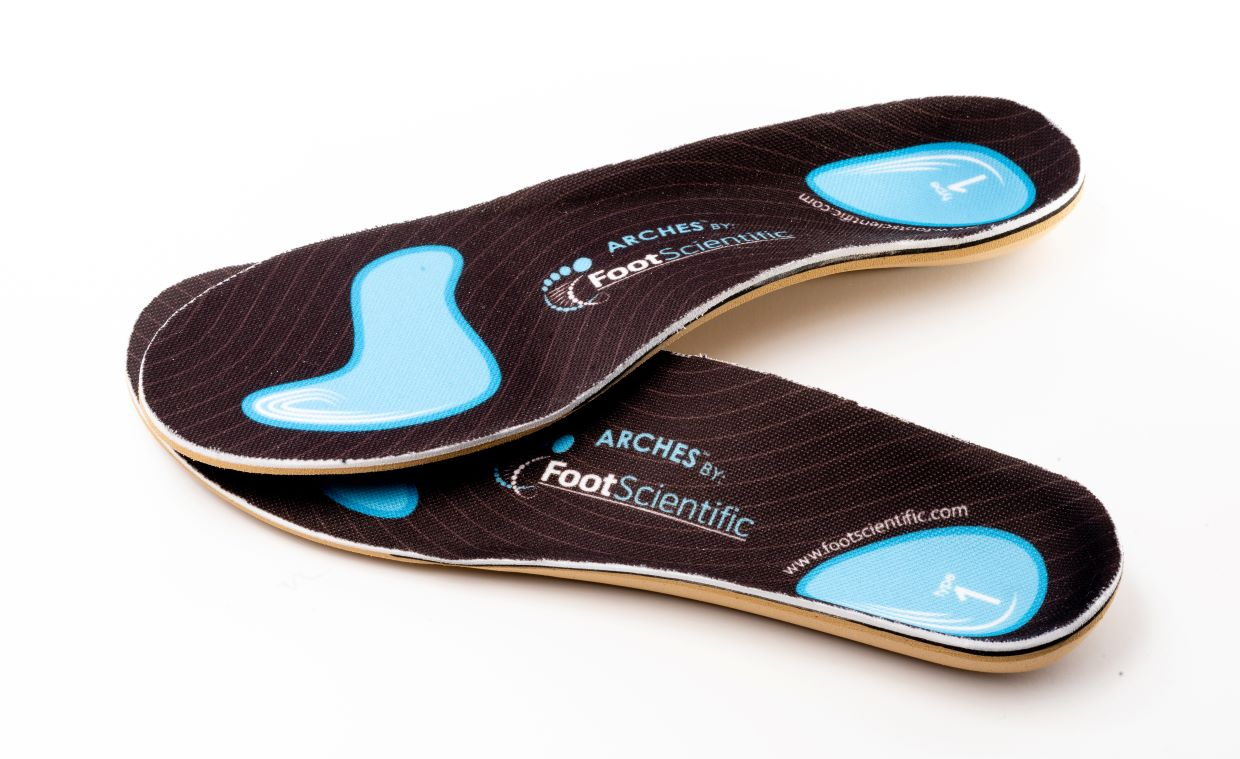
FootScientific Type 1 uses a 3-degree medial wedge built into the cork amalgam base. The firm material maintains this angle through thousands of steps. That's the difference between an orthotic that corrects your foot position and one that just cushions it.

The True Cost Comparison
Dr. Scholl's looks cheaper at the register. But what happens when you factor in replacement frequency?
For workers on their feet all day—restaurant staff, nurses, retail employees—Dr. Scholl's might need replacing monthly. At $50/month, that's $600/year on insoles that never actually corrected the underlying problem.

When Dr. Scholl's Actually Makes Sense
To be fair, drugstore insoles aren't worthless. They work for mild general discomfort without structural foot problems, temporary cushioning for occasional use, testing whether insoles help before investing in medical-grade options, and emergency situations when you need something today.
If your feet just hurt a little after a long day and you don't have flat feet or plantar fasciitis, $15 gel insoles might be all you need.

When You Need FootScientific Type 1
Medical-grade correction is warranted when you have diagnosed flat feet with visible arch collapse, plantar fasciitis causing heel pain especially in the morning, posterior tibial tendon problems causing inside ankle pain, shoe wear patterns showing heavy inside-edge wear, knee or hip pain related to foot alignment, or when you've tried drugstore insoles without lasting improvement.

The Wet Footprint Test
The wet footprint test can help you determine which product you need: Step with a wet foot on dark paper or concrete. If you see a full footprint with almost no arch gap, you have flat feet that need structural correction—not just cushioning.

The Bottom Line
Dr. Scholl's and FootScientific Type 1 are different products for different problems.
Dr. Scholl's provides temporary cushioning for mild discomfort. It compresses within weeks and offers no structural correction of underlying biomechanics.
FootScientific Type 1 provides biomechanical correction for flat feet. Its firm cork base maintains shape and the 3° medial posting actively controls pronation.
If you have flat feet causing plantar fasciitis or other problems, cushioning alone won't fix the underlying mechanics. You need an orthotic that maintains its corrective properties under load—and that requires different materials than what you'll find at the drugstore.

Ready to Try Real Correction?
If drugstore insoles haven't solved your foot pain, the FootScientific Type 1 Orthotic was designed by an orthopedic surgeon to address flat feet and overpronation with materials that maintain correction under your full body weight.
Frequently Asked Questions
For temporary cushioning, they may provide short-term comfort. But independent podiatric evaluation found they "collapse completely" under body weight and cannot provide structural support. If you need actual correction for flat feet or plantar fasciitis, they're not designed for that purpose regardless of marketing claims. The kiosk scan can also give inconsistent results based on how you stand on the machine.
EVA foam has a property called "compression set"—once it's compressed under sustained load, it doesn't spring back. A peer-reviewed study found measurable thickness loss (20% in the forefoot region) within just 10 days of regular wear. This is inherent to the material, not a defect. For people on their feet all day, replacement may be needed monthly, making the apparent cost savings disappear.
Research shows well-designed prefabricated orthotics work as well as custom for most people with flat feet and plantar fasciitis. Custom orthotics ($300-800) make sense for severe deformities or after failed prefabricated trials, but Type 1's 3-degree medial posting addresses the same biomechanical issue at a fraction of the cost. The cork amalgam base maintains corrective angles under body weight, which is the key functional requirement.
Expect 1-2 weeks of adaptation. The firm support feels different from soft cushioning—start with 2-3 hours daily and increase gradually. Some initial arch awareness is normal as your foot adjusts to proper alignment. Pain that worsens after 2 weeks may indicate you need a different orthotic type. Learn more about the break-in process and what to expect.
Try the wet footprint test: step with a wet foot on dark paper or concrete. If you see a full footprint with almost no arch gap, you have flat feet that need structural correction. Other signs you need correction include plantar fasciitis (sharp heel pain, especially in the morning), heavy wear on the inside edge of your shoes, or knee/hip pain related to foot alignment. If your feet just feel tired after a long day without these structural issues, cushioning may be sufficient.