

Best Insoles for Work Boots: Match the Support to Your Foot, Then Make It Fit the Boot
THE SHORT ANSWER
The best insoles for work boots give firm support that holds its shape for a full shift, matched to your foot type, with a thin layer of cushioning on top. Take the boot's factory insole out first so the orthotic sits flat. In steel toe or composite toe boots, make sure the insole doesn't push your toes up into the toe cap. A soft gel or foam insole feels good on day one but flattens under your weight long before the boots wear out.
Why work boots are hard on your feet
Work boots are built to protect your feet, not to support them. Most ship with a thin factory insole that offers little more than a layer of foam. Then they spend eight to twelve hours a day on concrete, ladders, gravel and steel decks, under your full weight and often under a load you are carrying.
Two things happen over a long shift. The small muscles that help hold up your arch get tired, so the arch lowers and more weight piles onto the heel and the ball of the foot. And any soft insole compresses, so the little support it offered in the morning is gone by the afternoon. That is why work boot pain so often shows up as heel pain, an aching arch or burning under the toes by the end of the day.

Cushioning won't carry a shift. Support will.
Cushioning softens each step. Support holds your foot in position so the load stays spread out. On a long shift in boots you need mostly the second.
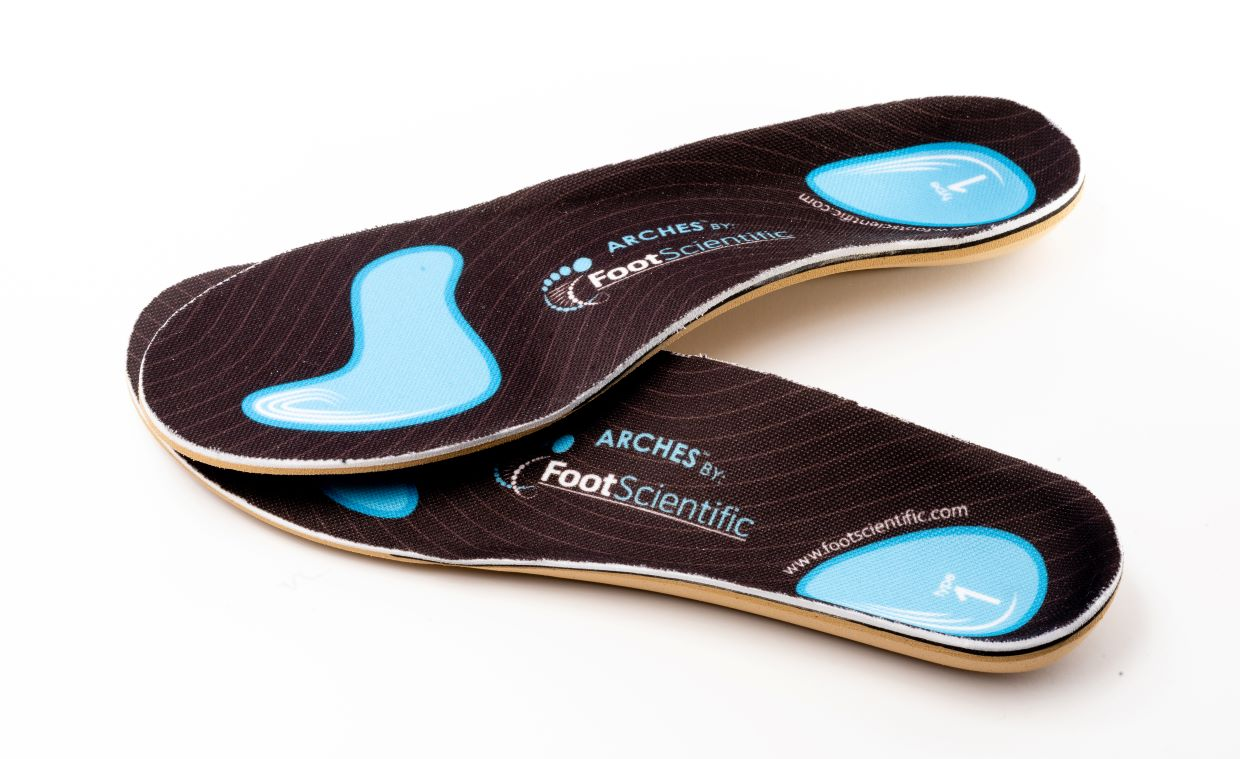
Arches orthotics are built on a molded cork amalgam base that holds its corrective shape under load, with padded foam to stabilize the heel and a comfort layer on top. Firm doesn't mean hard. It means the support you feel at 7 a.m. is still there at 5 p.m. We cover the difference in more detail in gel insoles vs. arch support.

Match the insole to your foot type
Most "best work boot insole" lists recommend one product for everyone. The Arches line was designed by Dr. Rob Faux, a board-certified orthopedic surgeon, around foot types, because a flat foot and a high arch need different things.

Flat feet or overpronation: Type 1
If your arches collapse and your ankles roll inward, a long shift makes it worse as your feet tire. Arches Type 1 uses a 3° medial wedge to bring the heel toward neutral and steady the foot. Our guide to insoles for flat feet and overpronation explains what to look for.
High, rigid arch: Type 3
A high arch puts less of the foot on the ground, so the load concentrates on the heel and the ball of the foot, and a tall, hard arch support can make that worse. Arches Type 3 uses a 3° lateral wedge with a recessed first metatarsal to bring the foot toward a more neutral position. Our guide to insoles for high arches explains why more arch support is not the answer.
Neutral arch: Type 2
If your arch looks typical and your feet don't roll noticeably in or out, Arches Type 2 is designed for the neutral foot. It cradles the foot and spreads pressure evenly, taking load off the heel and the ball of the foot.
Not sure which you have?
Stand with your shin straight up and down and slide your index finger under the middle of your foot. If it barely goes under, you likely have a flat foot. If it reaches the first crease of your finger, a neutral arch. If it goes past the first crease, a high arch. The Arches page walks through it.
How to fit an orthotic in a work boot
Take the factory insole out. Remove the insole that came with the boot and put the orthotic in its place. Stacking an orthotic on top of the factory insole raises your foot, crowds the toes and can push your heel up out of the boot's heel cup.

Trim only if you need to. If the orthotic is a little long for the boot, trim the end to fit. Most people don't need to. Note that trimmed orthotics can't be returned, so try them first.
Fit with your work socks. Thick work socks take up room. Check the fit with the socks you actually wear on the job.
Check your heel and toes. Your heel should sit down in the back of the boot without slipping, and your toes should have room to move. If the boot feels tight after the orthotic goes in, the boot may be short on room, which is worth solving before blaming the insole.
Break them in. A supportive orthotic changes how your foot loads, so don't start with a full twelve-hour shift. Start with 2 to 3 hours a day and gradually increase over 1 to 2 weeks. Mild muscle soreness as your body adjusts is normal. Sharp pain, new blisters, numbness or pain that keeps getting worse are reasons to stop and get advice.
Steel toe and composite toe boots
Arches orthotics work in steel toe and composite toe boots, and in most other work boots. The exception is a boot with a tapered toe, where the front narrows too much to leave room for the foot and the orthotic together.
A safety toe boot has a protective cap over the toes that takes up room you would normally have in the front of the boot. The back of the boot usually has space to spare, but the front is tight. That changes how you fit an insole.
- Watch the front of the foot. An insole that is thick under the toes pushes them up into the cap. You want the support at the arch and heel, with the front of the insole thin enough to leave your toes room.
- Leave space in front of your longest toe. Your toes should not press against the end of the cap when you stand with the orthotic in.
- Size the boot with the orthotic in. When you buy new safety boots, bring the orthotic and your work socks and try them together. Many people go up half a size.
Heat, sweat and wet boots
Boots get hot, and sweat breaks down soft foam fast. A few habits help any insole last:
- Take the orthotic out at the end of a shift so it and the boot can dry overnight.
- Rotate between two pairs of boots if you can. Keeping a separate pair of orthotics in each pair of shoes also helps them last.
- Wear moisture-wicking work socks.

How long do insoles last in work boots?
Arches orthotics don't lose their corrective features over time, but replacing them every 8 to 12 months keeps their support and correction at their best. Long daily shifts in boots are hard on the top cover, so replace them sooner if it wears through.
When to see a clinician
An insole is a good first step for tired, aching feet. See a professional if your pain is getting worse, if it wakes you at night, if one foot is clearly worse than the other or if you have swelling that doesn't settle. People with diabetes or reduced feeling in their feet should get professional advice before choosing any insole.

For long days on hard floors in any shoe, see our guide to the best insoles for standing all day.
RELATED GUIDE
Frequently Asked Questions
Yes, for most people who are on their feet all shift. Factory insoles in work boots are usually thin foam that offers little support. Replace the factory insole with an orthotic matched to your foot type rather than stacking one on top of the other.
A firm, supportive orthotic that holds its shape under your weight, with a thin cushioning layer on top and support matched to your foot type. Soft gel and foam feel comfortable at first but compress over a long shift.
For work boots, neither on its own. Both cushion impact, and both compress under steady body weight. Look for firm support first and treat cushioning as the top layer rather than the whole insole.
The one that matches your foot. A flat foot needs correction to stop the arch collapsing, while a high arch needs the load spread away from the heel and the ball of the foot. An insole that fits your foot type and still feels supportive at the end of a shift is the comfortable one.
Replace the factory insole with a supportive orthotic, fit the boots with the socks you wear to work, take the insoles out to dry overnight and rotate between two pairs of boots if you can. If the boots crowd your toes once an orthotic is in, the boots may be too small.
Yes. Arches orthotics work in steel toe and composite toe boots, as long as the boot isn't tapered at the toe. Take out the factory insole, check that your toes have room under the cap and size new safety boots with the orthotic in.
FOOTSCIENTIFIC ARCHES ORTHOTICS
Firm support matched to your foot type, built to last a full shift
Designed by Dr. Rob Faux, Board-Certified Orthopedic Surgeon
Shop Arches Orthotics →